Heavy-duty industrial fabrication
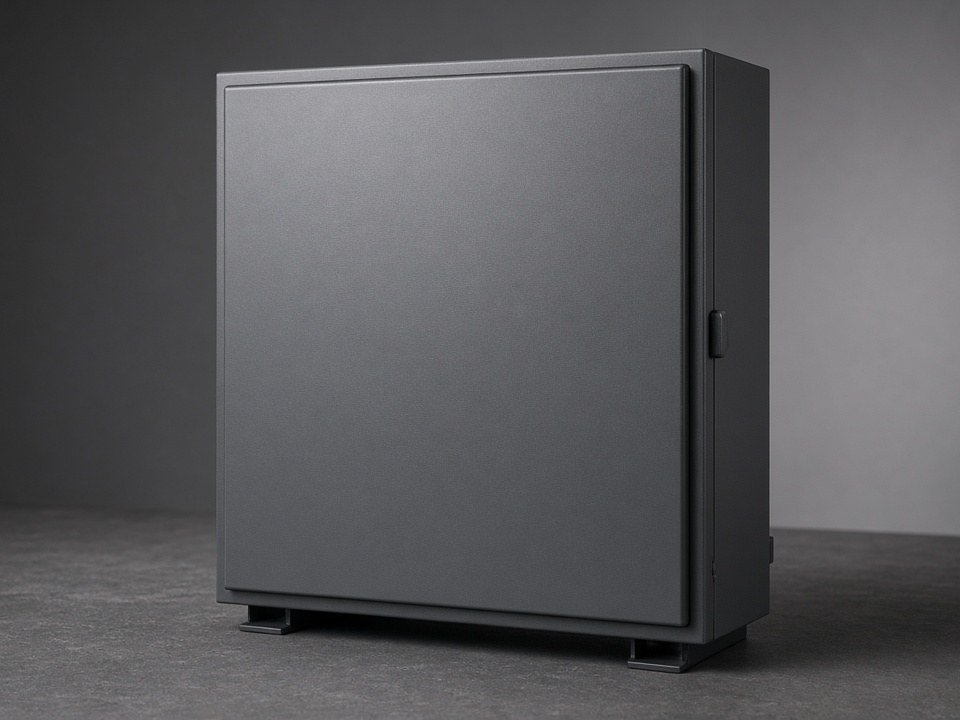
Carbon Steel Enclosures for Heavy Industrial Loads
Built from Q235 and SPCC plate for equipment exposed to repeated impact, vibration, and sustained static loads. Deep-penetration welding and durable powder coating help create robust enclosures for demanding service.
In-house production from laser cutting through final coating.
3–12 mm
Q235 and SPCC plate
Up to 10 mm
Full-penetration weld capacity in one pass
Up to 6 m
Assembly length
±1 mm
Critical mounting-face linear tolerance
Designed around the load path
Structural strength starts with the right plate and weld design
We match grade and thickness to each project’s calculated bending moment and impact energy, then use continuous welds on primary load members to support dependable, heavy-duty structures.
01 / Material
Q235 and SPCC plate
Plate from 3 mm to 12 mm provides the strength and ductility needed for frames carrying motors, transformers, or battery racks under normal service conditions.
02 / Welding
Deep-penetration joints
2 kW handheld laser welders and MIG stations achieve full joint penetration on material up to 10 mm thick in a single pass. Weld schedules follow AWS D1.1 structural requirements.
03 / Protection
Hard-wearing powder finish
Polyester or epoxy-polyester powder is cured to an 80–100 µm film thickness for abrasion resistance against tools, forklifts, and outdoor exposure. Standard RAL colors and custom formulations are available.
Continuous welds for primary load members
Continuous fillet and butt welds replace stitch patterns along primary load paths, avoiding the stress risers associated with lighter fabrication. The result is a substantial enclosure structure engineered for high mechanical strength, severe impact, and heavy loads.
One in-house process chain
Capacity for large industrial assemblies
Cutting, forming, hardware installation, welding, and powder coating stay within our facility—without external transport between production steps.
-
Cut
Three fiber lasers (12 kW and 6 kW) cut blanks up to 6 m long.
-
Form
Five CNC press brakes handle bends from 35 t to 200 t.
-
Assemble
Automated clinch and tapping cells install PEM hardware.
-
Weld
Twenty-four welding stations and an 18-set fixture table array support assemblies up to 6 m.
-
Finish
A 2.5 m × 6 m powder line completes the production sequence in-house.
Project scope
From equipment frames to protective structures
Typical orders range from 10 to 500 units. Maximum envelope reaches 6 m in length and 2.5 m in width.
- Machine base frames
- Battery storage cabinets
- Switchgear housings
- Conveyor guard structures
Engineering and quality
Support from RFQ through inspection
Five mechanical engineers review 3D models for bend relief, weld access, and hardware placement before production release. We return marked-up drawings with suggested plate gauges and weld callouts to preserve strength while reducing material weight where possible.
View inspection and traceability details +
Six QA personnel perform incoming plate certification checks, first-article dimensional reports, and 100% visual weld inspection.
Coating thickness and adhesion are tested on every batch. Inspection records remain on file for five years.
Start your RFQ
Share your load requirements and project files
Send STEP files, 2D drawings, or sketches. Include target quantity, annual volume, and environmental or load specifications. We respond with a firm quotation and lead-time estimate within two working days.
For sample shipments or site visits: Building 4, Kuiqing Road, Qingxi Town, Dongguan City, Guangdong Province
Share your project details to discuss a robust, cost-effective enclosure for your application.
{